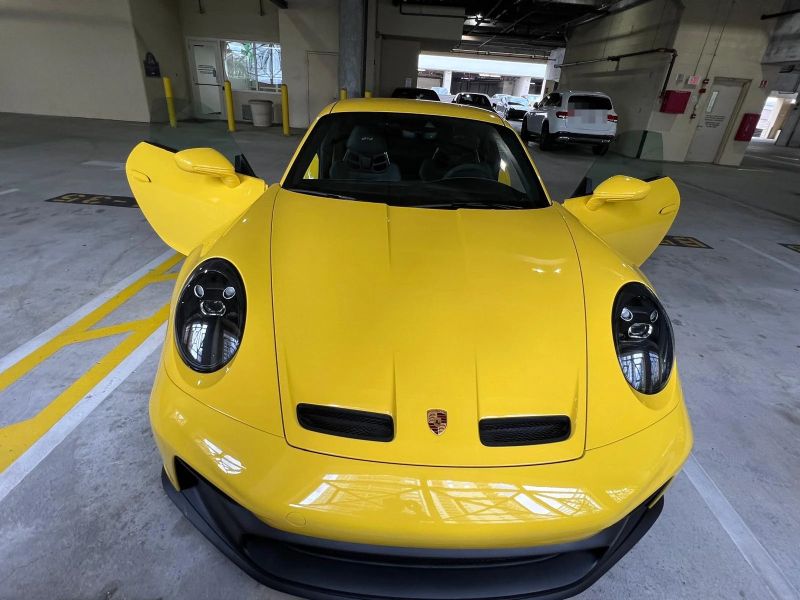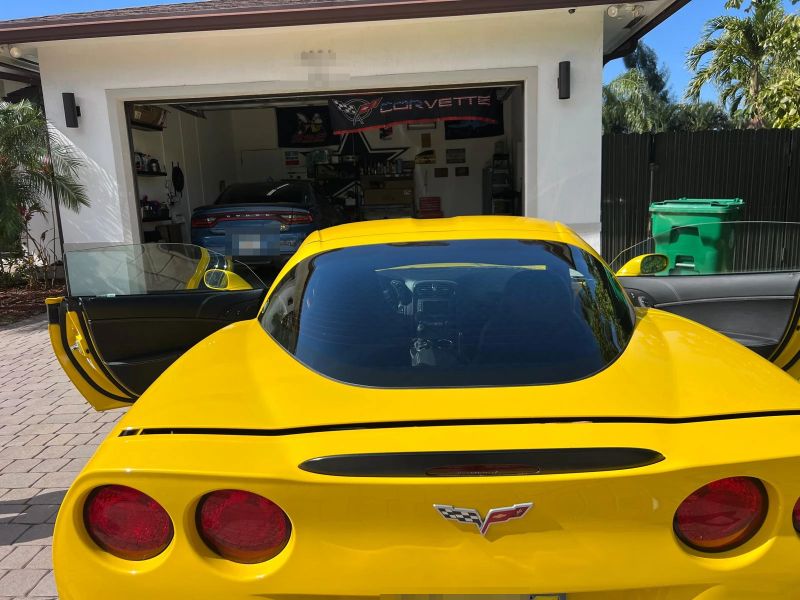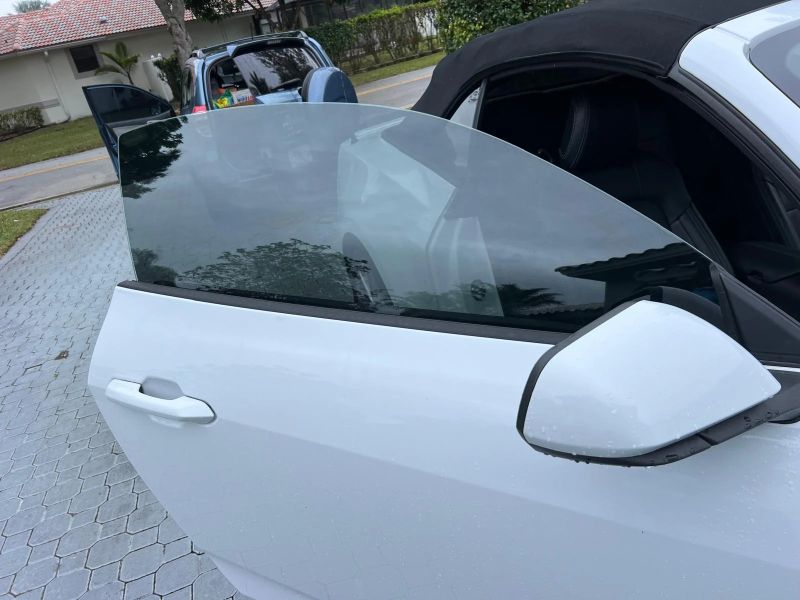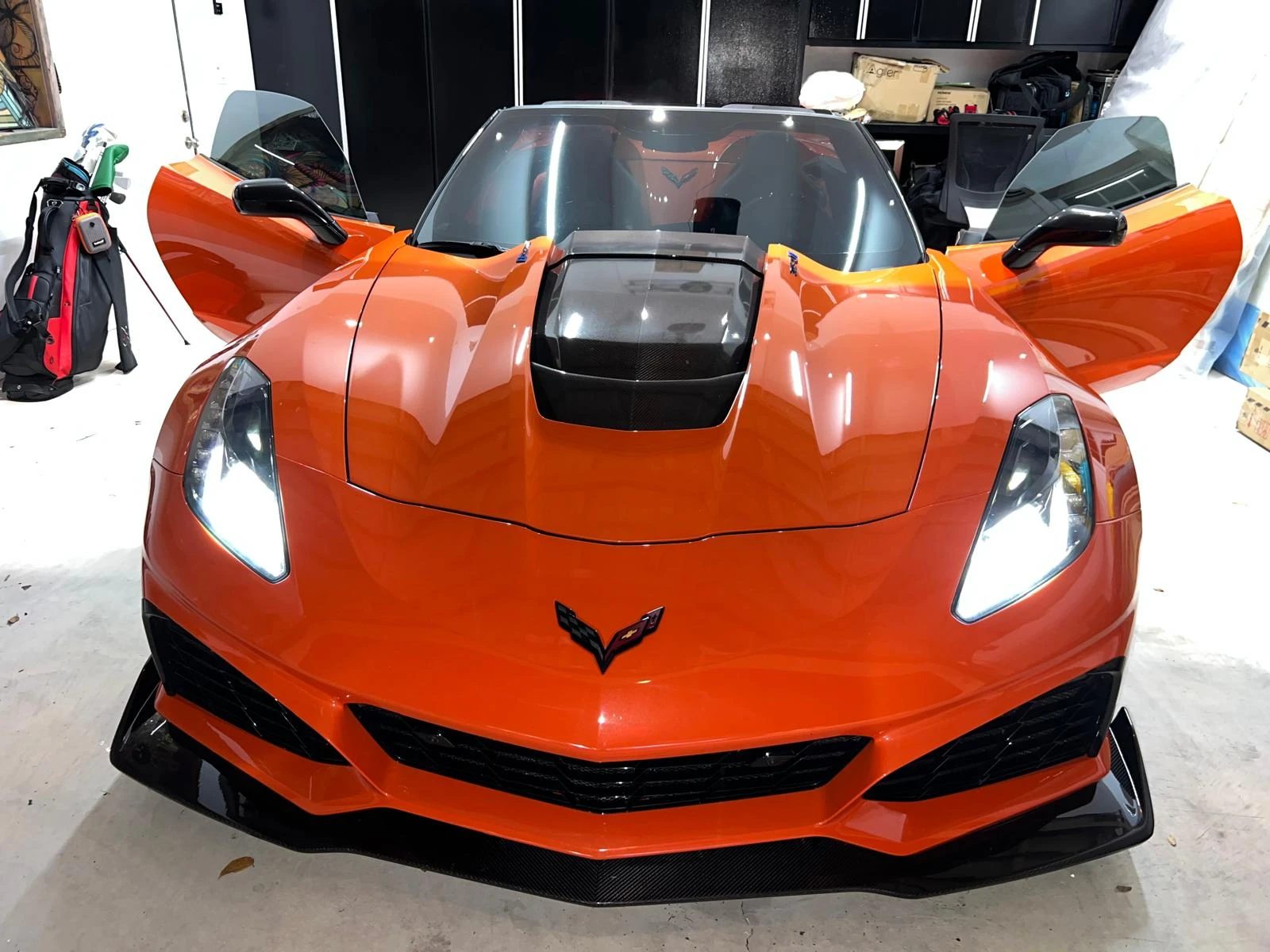
Tint that looks factory and keeps you legal in Florida.
South Florida sun turns a parked car into an oven and fades dashboards and leather fast. Good window film cuts the heat and glare you feel through the glass and blocks nearly all UV, while giving you privacy on the rear windows. It's mobile car tint at your home: we install it wherever the car already is, whether that's your driveway, your office lot or your job site.
What we tint
- Full vehicles: side windows and back glass
- Front two windows only, to match factory-tinted rear glass
- Back passenger windows and rear glass only
- Windshield visor strips (above the AS-1 line)
- Cars, coupes, convertibles, trucks, SUVs and vans
- Removal of old, bubbling or purple tint before re-tinting
Back passenger windows only
Plenty of customers only want the back done: the rear passenger windows and the back glass. It's common when the front windows are already tinted, or when you want privacy for kids, pets or gear on the back seat without darkening the driver's view. Florida lets the rear side windows and back glass go darker than the front, down to 15% on cars and coupes and 6% on SUVs, trucks and vans. Many SUVs and trucks already have factory privacy glass in the back; if you want it darker or cooler, we'll factor in the factory shade so the combined result stays legal.
Privacy tint
If you want people to see less of what's inside, the rear side windows and back glass are where you can go darker. Florida allows 15% on those windows for cars and coupes, and 6% for SUVs, trucks and vans, while the front side windows stay at 28% or lighter. We'll match the shade to your vehicle type so the car looks consistent and stays legal. For privacy at home, see residential privacy film.
Windshield strips
A windshield strip is a band of film across the top of the windshield that cuts glare from a low sun. Florida only allows non-reflective film above the AS-1 line, the small mark printed near the top edge of most windshields, so we cut the strip to that line rather than guessing at a width.
Choosing a film
How dark a film looks and how much heat it blocks are two different things. Standard dyed films mostly add privacy; carbon and ceramic films reject far more infrared heat, even in lighter shades, and don't fade to purple. We'll show you the manufacturer's specs for each option so you can compare real numbers before you pick.
Florida window tint law
Florida sets separate limits for the front side windows and the rear windows, and they differ between cars and SUVs/trucks/vans. The percentage is how much light the film lets through. Lower is darker.
| Window | Cars & coupes | SUVs, trucks & vans |
|---|---|---|
| Windshield | Non-reflective strip above the AS-1 line only | Non-reflective strip above the AS-1 line only |
| Front side windows | 28% or lighter | 28% or lighter |
| Rear side windows | 15% or lighter | 6% or lighter |
| Back window | 15% or lighter | 6% or lighter |
| Reflectivity | Front ≤ 25%, rear ≤ 35% | Front ≤ 25%, rear ≤ 35% |
For every window, reflectivity limits and medical exemptions, read our Florida window tint law guide.
Tell us the vehicle when you ask for a quote and we'll recommend the darkest shade that stays legal.
How a mobile install works
Most full vehicles take about 2 to 4 hours. We need a reasonably sheltered spot: a garage, carport or shaded driveway is ideal, since wind and dust are the enemy of a clean install. Afterwards, leave the windows up for 3 to 5 days while the film cures; a little haze or a few small water pockets during that time is normal and clears on its own.